


Standard Pallet Height for Shipping: Everything You Need to Know

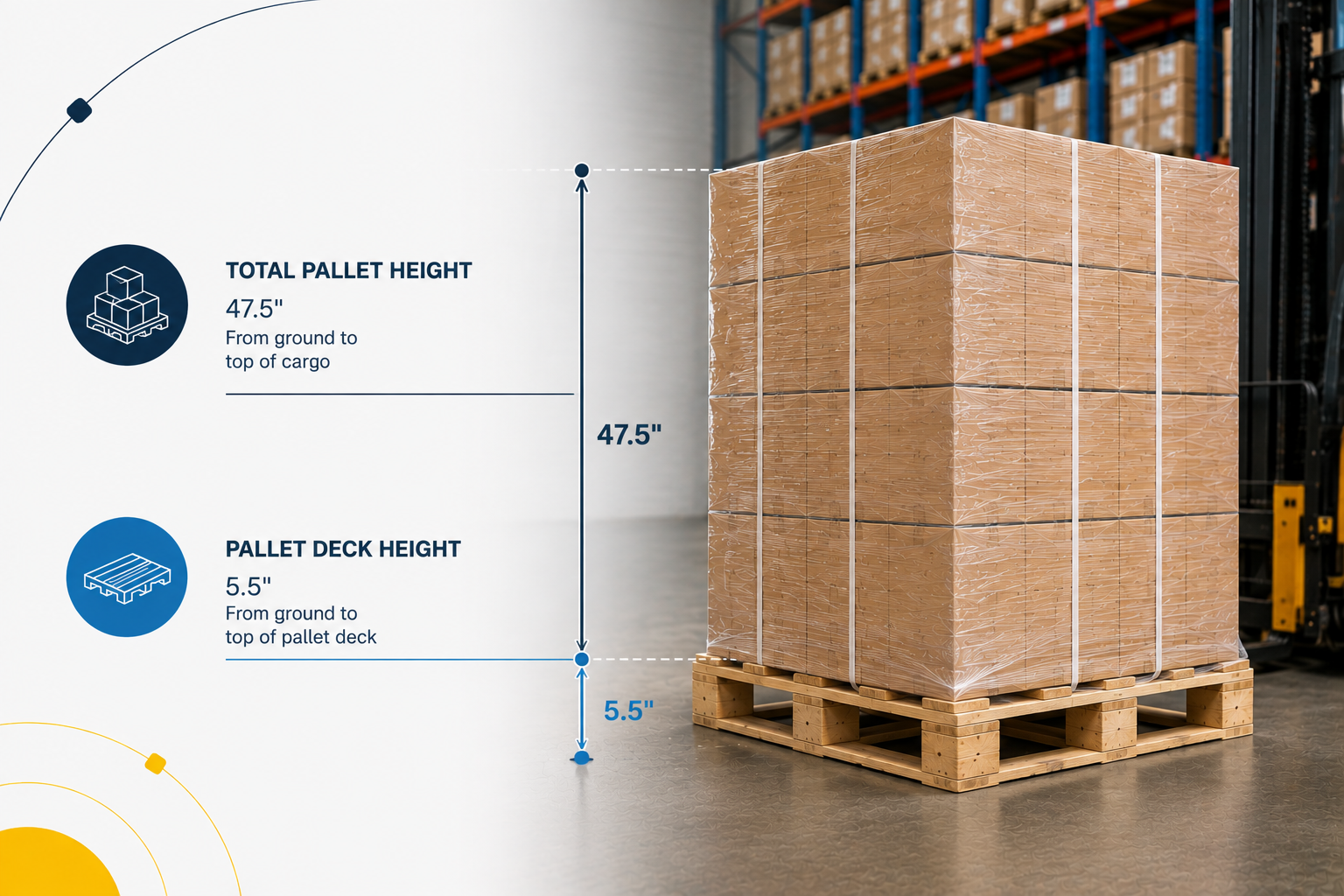
When optimizing your freight shipping operations across the United States, understanding standard pallet heights is just as important as knowing pallet dimensions. Pallet height affects everything from warehouse storage capacity to freight costs, stacking capabilities, and carrier equipment compatibility. Whether you’re managing LTL shipments or full truckload freight, getting pallet height right ensures efficient logistics and cost-effective shipping solutions.
What Is Pallet Height and Why Does It Matter?
Pallet height refers to the total vertical dimension of a loaded pallet, measured from the ground to the top of the cargo. This measurement is crucial because it directly impacts how freight fits into shipping containers, how many pallets can be stacked during transport, and whether your shipment meets carrier specifications for United States shipping.
Many shippers focus exclusively on pallet width and length but overlook height, a critical mistake that can result in rejected shipments, unexpected handling fees, or incompatibility with carrier equipment. Understanding standard pallet heights helps you plan more efficient shipments and avoid costly logistics problems.
Standard Pallet Deck Heights
The foundation of pallet height is the pallet deck itself, the wooden or plastic platform that supports your freight. Standard pallet heights in the United States include:
Standard Wooden Pallet Deck Height The most common wooden pallet used for shipping in the United States has a deck height of 5.5 inches. This has become the industry standard and is compatible with virtually all forklifts, pallet jacks, and warehouse equipment throughout the country. The 5.5-inch height accommodates the typical four-way stringer construction found on GMA pallets (48″ x 40″) and most specialty pallets.
Stringer vs. Deck Pallet Construction Stringers are the support beams running lengthwise under the pallet deck. A standard stringer pallet has a deck height of approximately 5.5 inches, while block pallets (which use blocks instead of stringers for support) typically measure around 4.75 to 5.5 inches in height. Understanding your pallet construction type is essential for accurate shipping calculations.
Plastic Pallet Heights Reusable plastic pallets, increasingly popular for freight shipping, typically range from 5 to 6 inches in deck height, though some specialized plastic pallets measure up to 6.5 inches. When shipping with plastic pallets, confirm the exact height with your carrier to ensure compatibility.
Total Loaded Pallet Height for Shipping
The actual height that matters for freight shipping isn’t just the pallet deck. It’s the total height including your cargo. This measurement determines:
- Whether your shipment fits within standard truck trailers (typically 108 inches interior height)
- How many pallets can be stacked vertically during transport
- Your overall freight class and shipping rates
- Compliance with carrier weight distribution requirements
Calculating Total Pallet Height Total pallet height = Pallet deck height + Cargo height
For example, a standard 5.5-inch pallet with 42 inches of cargo equals 47.5 inches total height. This allows for multiple pallets to be stacked in a standard 53-foot trailer while maintaining safety and stability.
How Pallet Height Affects Shipping Costs
Pallet height directly influences your freight shipping expenses in several ways:
Stacking Capability Taller individual pallets leave less vertical space for stacking in trailers, reducing the number of pallets a carrier can consolidate. This can increase your per-pallet shipping cost for LTL freight. Conversely, efficiently designed pallets with optimal heights allow carriers to stack more freight, potentially reducing your unit cost.
Freight Classification Carriers base shipping rates on several factors, including density and stackability. Pallets that stack efficiently and utilize trailer space effectively often qualify for better freight class ratings, resulting in lower overall shipping costs across the United States.
Handling and Equipment Standard 5.5-inch pallet heights ensure compatibility with most warehouse equipment, reducing special handling charges. Non-standard heights may require equipment adjustments or manual labor, increasing your freight expenses.
Maximizing Warehouse Efficiency With Proper Pallet Heights
Beyond shipping considerations, standard pallet heights impact your warehouse operations:
Vertical Storage Space Understanding standard pallet heights allows you to calculate maximum stacking heights in your facility. Most warehouses can safely stack standard pallets 4-5 high, depending on product weight and ceiling height. This optimization directly affects your storage capacity and facility utilization.
Equipment Compatibility Standard pallet heights work seamlessly with:
- Standard forklifts
- Pallet jacks
- Automated retrieval systems
- Conveyor systems
- Racking structures
Using non-standard heights may require specialized equipment, increasing operational costs and reducing flexibility.
Safety Considerations Standard pallet heights have been established with safety in mind. Pallets that deviate significantly from 5.5 inches may create stability issues during stacking and transport, posing safety risks to warehouse personnel and potentially damaging freight during shipping.
Best Practices for Pallet Height Management
To optimize your shipping operations:
- Standardize your pallet fleet: Using consistent pallet heights simplifies warehouse operations and shipping logistics
- Measure loaded pallets: Always measure total height including cargo to ensure carrier compatibility
- Communicate specifications: Provide carriers with exact pallet height measurements to prevent loading surprises
- Consider nesting: Some products allow cargo to nest, reducing total pallet height and improving stacking efficiency
- Plan packaging strategically: Design packaging that keeps loaded pallets within standard height ranges for maximum shipping efficiency
- Review carrier requirements: Different carriers may have specific pallet height preferences or restrictions for their freight services
Standard Pallet Height Dimensions Reference
Here’s a quick reference guide for standard pallet heights commonly used in United States shipping:
Standard wooden pallet deck: 5.5 inches
Typical block pallet deck: 4.75 to 5.5 inches
Plastic pallet deck: 5 to 6.5 inches
Maximum typical loaded pallet height: 60-65 inches (for optimal stacking in standard trailers)
Standard trailer interior height: 108 inches
Optimize Your Pallet Heights With Expert Guidance
Getting pallet height right might seem like a small detail, but it has significant implications for your shipping costs, warehouse efficiency, and overall supply chain operations. Whether you’re shipping a single pallet across the United States or managing hundreds of freight shipments monthly, understanding and optimizing pallet heights ensures you’re getting the most from your logistics investments.
World Options specializes in helping businesses streamline their shipping operations by optimizing every aspect of their freight strategy, including pallet specifications. Our team can help you evaluate your current pallet setup, identify optimization opportunities, and connect you with carriers that best match your pallet height requirements and shipping needs.
Ready to optimize your pallet heights and shipping strategy? Contact World Options today to discuss how proper pallet height management can reduce your freight costs and improve your warehouse efficiency.