


Understanding Pallet Sizes for Shipping: A Complete Guide to Freight Logistics

When it comes to shipping products across the United States, one of the most critical decisions you’ll make is selecting the right pallet size for your freight. Whether you’re a small e-commerce business or a large distributor handling LTL (less-than-truckload) shipments, understanding standard pallet dimensions can significantly impact your shipping costs, efficiency, and overall supply chain management.
What Are Standard Pallet Sizes?
Pallets are the foundation of modern freight shipping in the United States. These standardized platforms allow for efficient loading, unloading, and transportation of goods. The most common pallet sizes used in domestic shipping include the EUR-pallet and various North American standards.
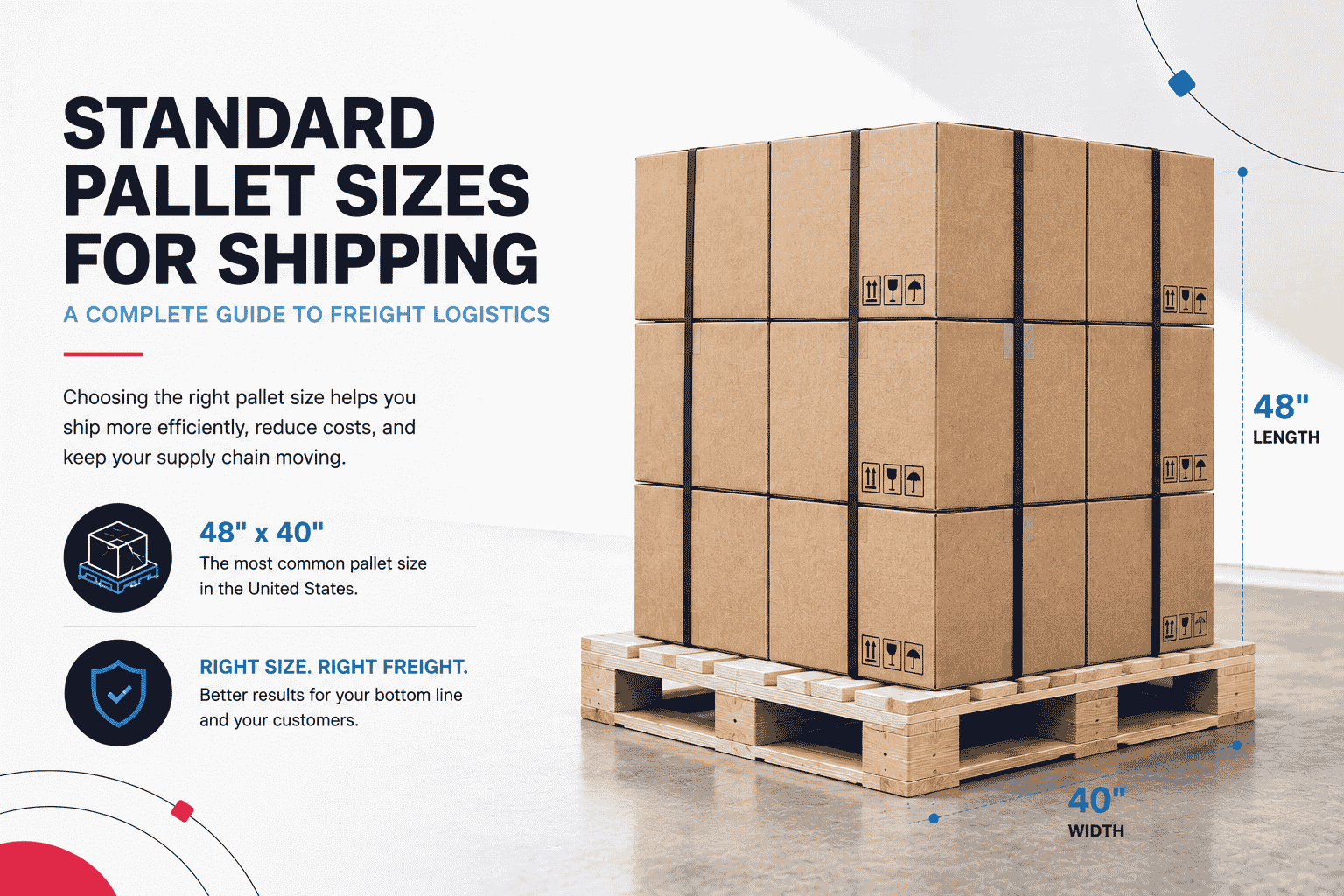
The most widely used pallet size in the United States is the 48″ x 40″ (GMA pallet), which has become the de facto standard for American freight logistics. This pallet dimension accommodates the typical warehouse infrastructure and shipping containers found throughout the nation. Measuring 48 inches in length by 40 inches in width, this pallet size is compatible with most forklifts, pallet jacks, and shipping equipment used by carriers and logistics providers.
Another common option is the 42″ x 42″ pallet, which offers a more symmetrical design. This square pallet configuration is preferred by some shippers because it provides better stability and can be rotated during loading, making it ideal for certain freight applications.
How Pallet Size Affects Your Shipping Costs
Selecting the appropriate pallet size for your shipping needs is more than just a matter of convenience. It directly impacts your freight rates. Carriers that specialize in LTL freight shipping charge based on several factors, including pallet dimensions, weight, and density classification. When you choose an oversized pallet for shipments that don’t require it, you’re essentially paying for wasted space on the carrier’s truck.
Conversely, attempting to squeeze freight onto an undersized pallet can violate safety regulations and may result in additional handling fees or rejection of your shipment by United States-based carriers. The optimal pallet size ensures that your goods fit efficiently while remaining within industry weight limits and stackability guidelines.
Standard Pallet Size Dimensions and Specifications
Understanding the specifications of different pallet sizes helps you make informed decisions about your shipping strategy:
48″ x 40″ Pallet (Standard GMA)
- Length: 48 inches
- Width: 40 inches
- Standard deck height: 5.5 inches
- Common load capacity: 1,500-2,000 lbs
42″ x 42″ Pallet (Square)
- Length: 42 inches
- Width: 42 inches
- Standard deck height: 5.5 inches
- Common load capacity: 1,200-1,500 lbs
40″ x 48″ Pallet (Reversed Standard)
- Length: 40 inches
- Width: 48 inches
- Often used interchangeably with the GMA pallet
36″ x 36″ Pallet (European-style)
- Length: 36 inches
- Width: 36 inches
- Common in specialty and international freight
- Lighter load capacity
Maximizing Freight Efficiency With the Right Pallet Size
When shipping freight across the United States, working with a logistics provider that understands pallet optimization can save you substantial money. By choosing the correct pallet dimension for your specific shipment, you can:
- Reduce per-unit shipping costs by maximizing the use of available trailer space
- Improve warehouse efficiency by standardizing your pallet fleet
- Enhance supply chain visibility with consistent freight tracking and handling
- Minimize product damage with appropriate pallet sizes and securing methods
- Ensure regulatory compliance with carriers and shipping industry standards
Pallet Weight and Density Considerations
Beyond dimensions, understanding how your products interact with different pallet sizes is crucial. Freight carriers classify shipments based on weight and density. A 48″ x 40″ pallet loaded with lightweight items might classify differently than the same pallet loaded with dense freight. This classification directly affects your LTL shipping rates.
When planning your freight shipments, consider:
- Total weight capacity of your chosen pallet
- Density and fragility of your products
- Required stacking capabilities for multi-pallet shipments
- Climate considerations for goods requiring temperature control
Choosing Your Freight Partner
World Options understands that every shipping situation is unique. Whether you’re managing a single shipment or coordinating regular freight movements across the United States, selecting the right pallet size is the foundation of cost-effective logistics. Our team can help you evaluate your specific shipping needs and recommend the optimal pallet configuration for maximum efficiency and minimal cost.
The right pallet size isn’t just about fitting your freight onto a platform. It’s about optimizing your entire shipping operation, from warehouse management to final delivery. By partnering with experienced freight professionals who understand pallet logistics, you can transform a routine aspect of your supply chain into a significant competitive advantage.
Ready to optimize your freight shipping strategy? Contact World Options today to discuss your pallet sizing needs and discover how we can help you streamline your United States shipping operations.