


How High Can You Stack a Pallet for Shipping? Maximizing Space Without Damaging Freight

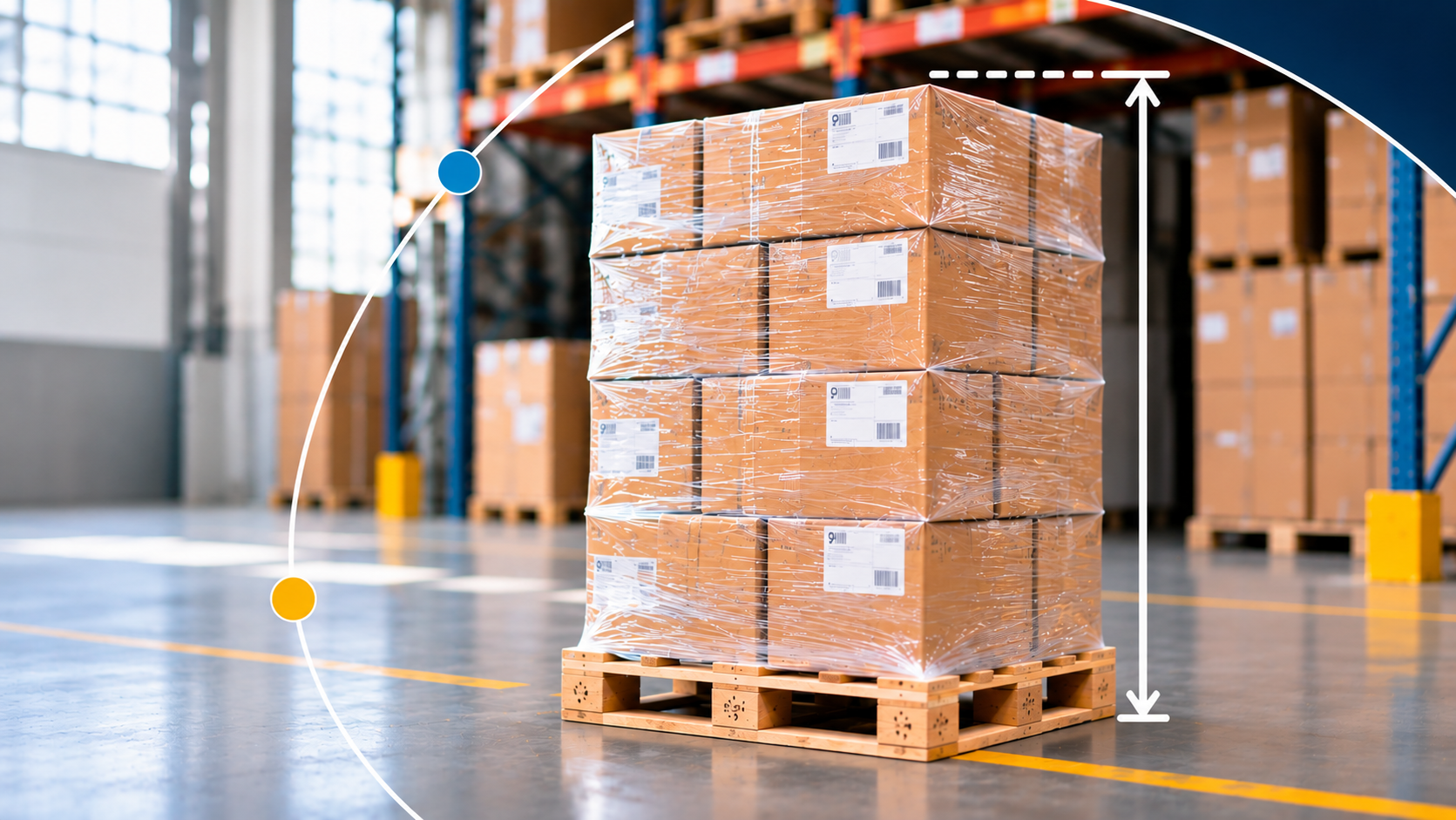
One of the most common questions shippers ask is: how high can I stack pallets before running into problems? The answer affects freight costs, carrier availability, delivery reliability, and whether your shipment arrives in perfect condition. Understanding pallet stacking limits is essential for optimizing shipping costs and ensuring your freight reaches its destination safely. This comprehensive guide explains the physical, regulatory, and economic factors that determine maximum pallet stacking height for shipping.
Standard Pallet Dimensions and Deck Heights
Before discussing stacking, let’s review the foundation: pallet dimensions and heights.
Standard Pallet Deck Height
Standard wooden pallets in the United States have a deck height of 5.5 inches. This measurement is consistent across the industry and compatible with all standard warehouse equipment.
Standard Pallet Dimensions:
- Length: 48 inches
- Width: 40 inches
- Deck height: 5.5 inches
Total Pallet Height With Cargo
Total pallet height = Pallet deck height (5.5″) + Cargo height
For example:
- Pallet: 5.5 inches
- Cargo stacked to 42 inches
- Total pallet height: 47.5 inches
Maximum Pallet Height for Shipping Containers
The primary constraint on pallet height is trailer interior clearance.
Standard Trailer Dimensions
Most freight trailers have interior dimensions of:
- Length: 52-53 feet
- Width: 8.5 feet
- Interior height: 108 inches (9 feet)
Stacking Calculation
Maximum safe loaded pallet height = Trailer interior height – minimum clearance
Industry Standard Safe Stacking:
- Trailer interior height: 108 inches
- Required clearance: 6-12 inches (prevents freight from contacting roof)
- Maximum single pallet height: 96-102 inches
This means if your pallet deck height is 5.5 inches, your cargo can be approximately 90-96 inches tall while staying safely within trailer clearance.
Double-Stacking Pallets
Double-stacking (stacking one pallet on top of another) is common for shipments with lower individual pallet heights.
Double-Stack Example:
- Lower pallet deck: 5.5 inches
- Lower pallet cargo height: 42 inches (typical for furniture, boxes)
- Lower pallet total: 47.5 inches
- Upper pallet deck: 5.5 inches
- Upper pallet cargo height: 42 inches
- Upper pallet total: 47.5 inches
- Total height: 95 inches (fits within 108-inch trailer with 13-inch clearance)
Double-stacking considerations:
- Must ensure lower pallet can support upper pallet weight
- Typical weight limit for double-stacking: 2,000-2,500 lbs per pallet
- Upper pallet must be secure and stable
- Cargo must be stackable (not fragile or crushable)
Weight Distribution and Pallet Stacking Safety
Height isn’t the only consideration—weight and stability matter equally.
Pallet Weight Limits
Standard wooden pallets typically support:
- Single layer: 1,500-2,000 lbs
- Two layers (double-stack): 1,000-1,500 lbs per pallet (reduced due to lower pallet supporting upper pallet weight)
- Industrial-grade pallets: May support higher weights
Stability and Safety
Unstable stacking causes:
- Freight shifting during transport
- Product damage
- Safety hazards for warehouse personnel
- Carrier rejections and service denials
- Increased freight classification (higher costs)
Ensure stable stacking:
- Distribute weight evenly across pallet
- Use corner guards or edge protectors
- Secure with stretch wrap or strapping
- Avoid top-heavy configurations
- Match cargo density (don’t place light items on heavy items)
Freight Class Impact
Higher stacking increases your freight class, which increases shipping costs:
- Stable, stackable freight: Class 50-70 (lower cost)
- Unstable or non-stackable: Class 85-125 (higher cost)
Getting the stacking right reduces your freight classification, saving 15-30% on shipping costs.
Regulations and Compliance
DOT Regulations on Trailer Loading
The Department of Transportation has specific requirements for loading trailers:
- Freight must be properly secured to prevent shifting
- Clearance must be maintained from roof and sides
- Weight distribution must be legal (axle weight limits)
- Hazardous materials have specific stacking restrictions
Axle Weight Regulations
Overloading axles is illegal and results in fines and service denials:
- Gross vehicle weight rating (GVWR): 80,000 lbs maximum
- Tandem rear axle: 34,000 lbs maximum
- Single steering axle: 20,000 lbs maximum
Stacking too much weight in one area can violate axle weight limits even if total trailer weight is legal.
Over-Height Restrictions
Trailers exceeding standard height (108 inches interior or 13.5 feet exterior) require special permits and restricted routes, dramatically increasing shipping costs.
Specialized Trailers for Higher Stacking
Some specialized trailers accommodate taller loads:
Drop-Deck (Step-Deck) Trailers
Drop-deck trailers have a lowered rear section:
- Rear interior height: 6-7 feet
- Front interior height: 8-9 feet
- Allows taller cargo in the rear section
- Cost premium: 15-25% more than standard trailers
Drop-decks are useful for freight taller than 8.5 feet but narrower.
Specialized Equipment Trailers
For extremely tall freight, options include:
- Lowboy trailers: Designed for heavy equipment, lower deck height
- Open-top trailers: For freight exceeding standard height
- Expandable/sliding roof trailers: Limited availability and expensive
How Pallet Height Affects Shipping Costs
Impact on Freight Class
Pallet configuration affects freight classification, which determines your shipping rate:
Scenario 1: Well-Stacked Pallet
- Dense, stackable freight
- Optimized pallet height (60-65 inches total)
- Stable, secure packaging
- Result: Class 70, lower rates
Scenario 2: Poorly-Stacked Pallet
- Unstable, non-stackable freight
- Excessive height concerns
- Poor packaging
- Result: Class 100+, premium rates
Cost impact: 30-50% rate difference between well and poorly-stacked pallets
Impact on Carrier Availability
Carriers may refuse to move:
- Freight exceeding trailer clearance
- Unstable or unsafe stacking configurations
- Freight requiring special equipment
- Overloaded pallets
This limits your carrier options and increases costs.
Best Practices for Optimal Pallet Stacking
Step 1: Determine Total Pallet Height
Calculate:
- Pallet deck height: 5.5 inches (standard)
- Cargo height: Measure your stacked goods
- Total: Add the two together
Example: 5.5″ pallet + 54″ cargo = 59.5″ total pallet height
Step 2: Verify Stackability
Check cargo characteristics:
- Can items be safely stacked without damage?
- Are they fragile or crushable?
- Is the weight distributed evenly?
- Will stacking cause deformation?
Step 3: Ensure Proper Securing
Secure your load:
- Use stretch wrap (minimum 3 layers for outside)
- Apply strapping for extra security
- Use corner guards to protect edges
- Ensure uniform wrapping (prevents shifting)
Step 4: Optimize Pallet Configuration
Maximize density classification:
- Stack freight efficiently on pallet
- Minimize wasted space
- Use proper pallet dimensions
- Maintain consistent height across pallet
Step 5: Maintain Trailer Clearance
Calculate clearance:
- Trailer interior height: 108 inches
- Your pallet height: X inches
- Clearance: 108 – X (minimum 6 inches recommended)
If clearance is less than 6 inches, you’ll need a specialized trailer (cost premium).
Step 6: Verify Weight Distribution
Check weight limits:
- Maximum pallet weight: 2,000 lbs (single stack) or 1,500 lbs (double-stack)
- Distribute weight evenly across pallet
- Avoid overloading single locations
Real-World Examples
Example 1: Furniture Shipping
Product: Upholstered sofa on standard pallet
- Pallet deck: 5.5 inches
- Sofa height: 36 inches
- Total pallet height: 41.5 inches
- Weight: 300 lbs
- Stackability: Yes (can stack 2-3 high safely)
Optimization:
- Can double-stack in most trailers (83 inches total with cushioning)
- Single-stack in standard trailer with 24+ inches clearance
- Good freight class (70-75) due to stackability
- Competitive shipping rates
Example 2: Boxed Electronics
Product: Electronics in boxes on standard pallet
- Pallet deck: 5.5 inches
- Boxes stacked: 48 inches high
- Total pallet height: 53.5 inches
- Weight: 1,800 lbs
- Stackability: Yes (dense, rigid boxes)
Optimization:
- Can double-stack (107 inches total with minimal clearance)
- Tight fit requires precise loading
- Good freight class (50-60) due to density
- Cost-effective consolidation strategy
Example 3: Irregular-Shaped Items
Product: Lawn equipment on standard pallet
- Pallet deck: 5.5 inches
- Equipment height: 44 inches
- Total pallet height: 49.5 inches
- Weight: 900 lbs
- Stackability: Limited (irregular shape, risk of damage)
Recommendation:
- Do NOT double-stack (damage risk)
- Single-stack only
- Requires more trailer space per item
- Higher freight class (85+) due to non-stackability
- More expensive per unit due to space inefficiency
Common Stacking Mistakes to Avoid
Mistake 1: Exceeding trailer clearance Result: Shipment rejection, need for specialized equipment, cost premium
Mistake 2: Over-stacking weight capacity Result: Carrier rejection, damage, potential axle weight violations
Mistake 3: Stacking fragile items safely stacked items on top Result: Damage to fragile items, loss, claims
Mistake 4: Poor load securing Result: Freight shifting during transport, damage, safety hazards
Mistake 5: Ignoring freight classification impact Result: Unnecessarily high freight class, premium rates
Mistake 6: Double-stacking without verifying carrier approval Result: Carrier rejection at pickup, service disruption
Working With Carriers on Stacking Requirements
Different carriers have different stacking policies:
- Some allow standard double-stacking
- Others have restrictions based on freight type
- Hazardous materials have specific stacking rules
- High-value freight may require special handling
Best practice: Communicate your stacking configuration to your carrier before pickup to avoid surprises and service denials.
Maximizing Shipping Efficiency Through Proper Stacking
Proper pallet stacking:
- Reduces freight classification (lowers costs)
- Improves carrier utilization (better service options)
- Ensures freight arrives safely
- Enables consolidation opportunities
- Prevents unexpected carrier rejections
Understanding pallet sizes, heights, and stacking limits is foundational to optimizing freight shipping. Combined with correct freight classification and proper documentation, proper stacking ensures cost-effective, reliable shipping.
Partner With Pallet and Shipping Experts
World Options helps businesses optimize every aspect of pallet shipping, including:
- Determining optimal pallet sizing and height for your products
- Calculating appropriate stacking configurations
- Optimizing freight classification through proper stacking
- Identifying carrier requirements and restrictions
- Negotiating rates based on optimized pallet configurations
- Coordinating with carriers to ensure stacking compatibility
Whether you’re shipping furniture, temperature-controlled goods, or standard products, optimizing your pallet stacking strategy improves profitability and service reliability.
Ready to optimize your pallet stacking strategy? Contact World Options today to discuss how proper pallet sizing and stacking can reduce your freight costs while improving delivery reliability.