


Best Shipping for Small Business: A Complete Guide to Cost-Effective Logistics

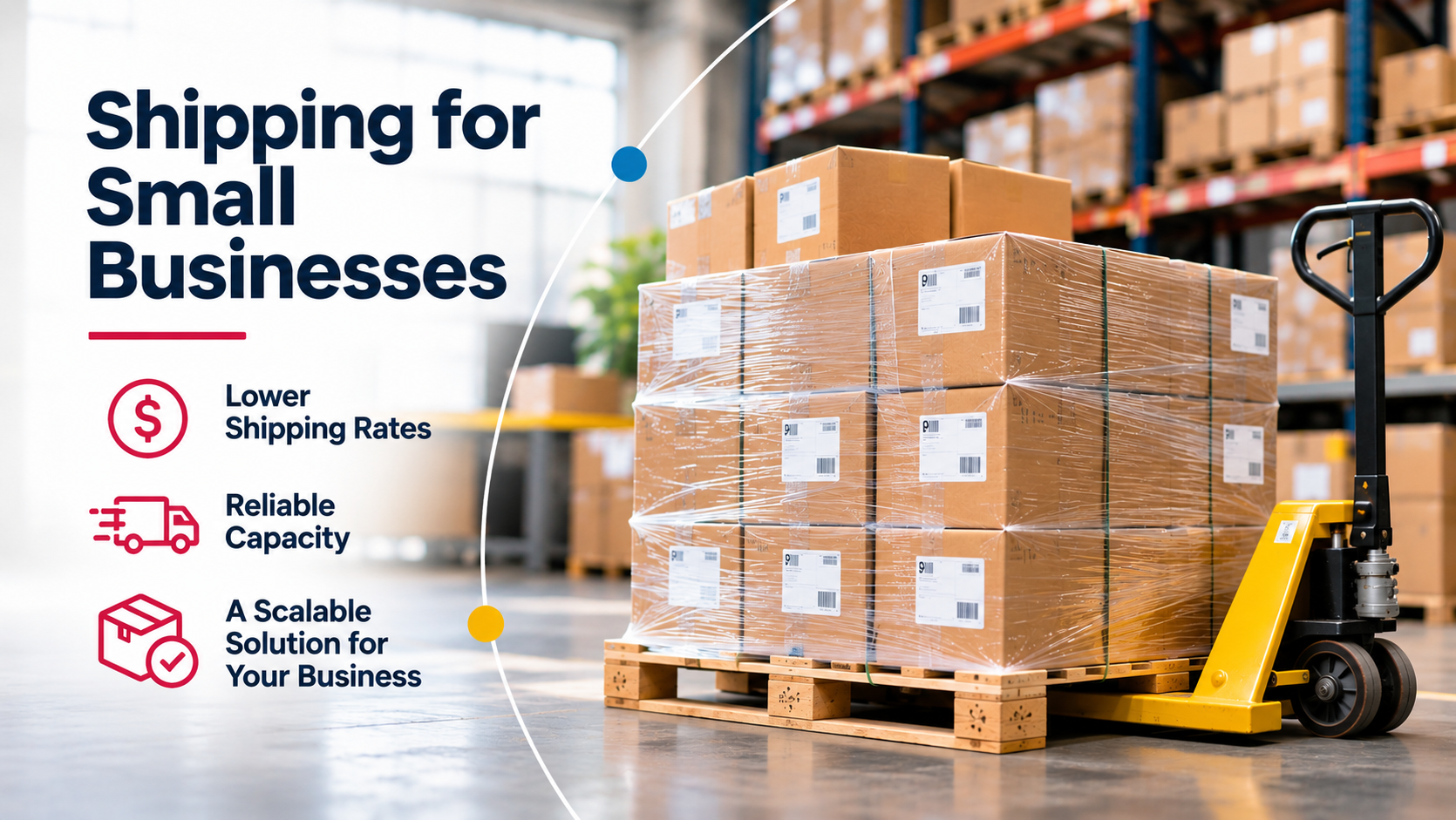
As a small business owner, shipping costs can significantly impact your profitability. Whether you’re an e-commerce seller, a manufacturer, a furniture retailer, or a service provider shipping products to customers, choosing the right shipping strategy is critical for your success. The difference between optimal shipping decisions and poor choices can mean the difference between healthy margins and struggling financially. This comprehensive guide helps small business owners understand their shipping options and select the best solutions for their specific needs and budget.
Small Business Shipping Challenges
Small businesses face unique shipping challenges compared to large enterprises:
Limited Shipping Volume Unlike major retailers that ship thousands of packages daily, small businesses often ship inconsistent volumes. This variability makes it difficult to negotiate volume discounts or justify dedicated shipping accounts.
Budget Constraints Small business margins are typically tighter than large corporations. A $5-10 difference in shipping cost per item can significantly impact profitability. However, underestimating shipping requirements can lead to customer dissatisfaction and returns.
Diverse Product Types Small businesses often ship different types of products—some requiring standard parcel shipping, others needing specialized handling like temperature control. Managing multiple shipping solutions adds complexity.
Growth Unpredictability Small businesses experience seasonal fluctuations and unpredictable growth. Shipping solutions that work for current volume may become inefficient or unaffordable as the business scales.
Limited Shipping Expertise Most small business owners are experts in their products or services, not logistics. Understanding shipping terminology, carrier options, and cost optimization requires education and decision-making time.
Parcel Shipping for Small Businesses
For many small businesses, parcel shipping through carriers like USPS, UPS, FedEx, and DHL is the primary shipping method.
Advantages of Parcel Shipping for Small Business
Easy to Access Parcel carriers have retail locations nationwide and offer simple online account setup. No special equipment or expertise required.
Predictable Pricing Weight and distance-based pricing is straightforward. Small businesses can quickly estimate shipping costs for customers.
Fast Delivery Parcel carriers typically deliver within 1-5 business days, meeting customer expectations for speed.
Tracking and Insurance Built-in package tracking and insurance options provide peace of mind for valuable items.
Pickup Convenience Most parcel carriers offer daily or multiple-weekly pickups from business locations.
Parcel Shipping Cost Optimization Tips
Negotiate Small Business Discounts Even small businesses can get 10-20% discounts by signing negotiated agreements directly with carriers. Request a rates specialist to discuss your volume.
Use USPS for Light Packages USPS Priority Mail often beats UPS and FedEx prices for packages under 5 pounds, especially to distant zones.
Compare Zone-Based Rates If your business ships primarily to specific regions, choose the carrier with the best rates for those zones rather than assuming national carrier advantages.
Optimize Packaging Reduce dimensional weight charges by using right-sized packaging. Oversized boxes trigger dimensional weight pricing that can double shipping costs.
Consolidate Shipments When Possible When feasible, consolidate multiple orders into single shipments to commercial addresses to reduce per-item shipping costs.
Freight Shipping for Small Businesses
Many small businesses assume freight shipping is only for large enterprises. However, freight shipping options are increasingly accessible and cost-effective for smaller operations.
When Small Businesses Should Consider Freight
Selling Furniture or Large Items If your business sells couches, dining tables, appliances, or other large items, parcel carriers will either reject shipments or charge dimensional weight fees that exceed freight costs.
Shipping Palletized Products When consolidating multiple orders onto pallets for wholesale or retail distribution, LTL (less-than-truckload) freight becomes more economical than individual parcel shipments.
Managing Temperature-Sensitive Products Small businesses selling food products, pharmaceuticals, or other temperature-sensitive items need temperature-controlled shipping capabilities that parcel carriers don’t reliably offer.
International Shipping Requirements Parcel carriers charge premium rates for international shipping. Freight brokers often negotiate better rates for international pallet shipments.
High-Value, High-Risk Shipments Expensive items or items prone to theft benefit from freight carriers’ enhanced security measures, real-time tracking, and specialized handling.
Understanding Freight Class and Pricing
Freight pricing differs fundamentally from parcel pricing. Understanding freight class helps small businesses optimize costs:
Freight Class Basics
- Lower classes (50-70) = denser, easier-to-handle items = lower rates
- Higher classes (85-125) = bulkier, harder-to-handle items = higher rates
- Your freight class depends on density, stackability, and handling requirements
Example Class Scenarios
- Wooden furniture: Class 65-75 (stackable, moderate density)
- Upholstered sofas: Class 85-100 (bulky, less stackable)
- Electronics: Class 50-60 (dense, valuable)
Getting the correct freight class is critical—misclassifying can result in unexpected charges or service denials.
Hybrid Shipping Strategy for Growing Small Businesses
The best shipping approach for most small businesses combines multiple carriers and methods:
Parcel for Direct-to-Consumer Use USPS, UPS, or FedEx for individual customer orders shipped to homes or small businesses.
Freight for B2B Distribution Use freight carriers through brokers like World Options for bulk orders shipped to retail locations or warehouses.
Temperature Control When Needed Use specialized temperature-controlled carriers for perishable or sensitive products.
Freight for Large Items Use freight brokers for furniture, equipment, and oversized shipments that exceed parcel dimensions.
International Freight Use freight brokers for international pallet shipments to get better rates than parcel carriers offer.
Cost Comparison: Real-World Examples
Example 1: E-Commerce Clothing Store
Current Situation: Selling $15-30 items, averaging 50 orders weekly, shipping domestically
Best Solution: USPS Priority Mail with negotiated small business rate
- Average cost per shipment: $4-6
- Speed: 2-3 business days
- Why: Cost-effective for lightweight items, fast enough for customer expectations
Annual Impact: $10,000-15,000 in shipping costs
Example 2: Furniture Retailer
Current Situation: Selling couches, tables, and chairs averaging $500-2,000, shipping 5-15 orders weekly
Best Solution: LTL freight through broker
- Parcel approach: $400-800 per shipment (dimensional weight overcharge)
- Freight approach: $150-300 per shipment (freight class optimization)
- Savings: $250-500 per shipment
Annual Impact: $65,000-130,000 in savings by switching from parcel to freight
Example 3: Food/Beverage Producer
Current Situation: Shipping perishable products nationwide, 20-30 orders weekly
Best Solution: Temperature-controlled LTL freight
- Parcel approach: Not reliably available for perishables, or premium rates
- Freight approach: $200-400 per consolidated shipment for multi-customer orders
- Speed: 2-5 business days with maintained temperature control
Annual Impact: Better reliability, customer satisfaction, and cost control
Example 4: Manufacturing Business
Current Situation: Shipping B2B orders of components/parts, 5-10 orders monthly averaging 500-2,000 lbs
Best Solution: FTL or LTL freight through broker
- Parcel approach: Impossible (exceeds weight limits)
- Freight approach: $400-1,500 per shipment depending on volume and distance
- Why: Only viable option for these volumes; consolidation opportunities
Annual Impact: Essential for business operations
Small Business Shipping Mistakes to Avoid
Mistake 1: Using Only One Carrier Result: Missing better pricing options and specialized services
Mistake 2: Not Optimizing Packaging Result: Paying dimensional weight charges that exceed freight costs
Mistake 3: Ignoring Freight Options Result: Paying 2-3x more than necessary for oversized items
Mistake 4: Guessing Freight Class Result: Service denials or unexpected charges upon pickup
Mistake 5: Not Asking for Volume Discounts Result: Leaving money on the table with predictable shipping volume
Mistake 6: Overlooking Carrier Services Result: Poor customer experience due to damaged goods or missed delivery windows
Scaling Shipping as Your Small Business Grows
Your shipping strategy should evolve with your business:
Stage 1: Startup (0-50 orders/week)
- Parcel shipping only (USPS Priority Mail)
- Manual label creation
- Cost focus: Essential
Stage 2: Growth (50-200 orders/week)
- Parcel shipping with negotiated rates
- Shipping software integration
- Consider freight for specialized items
- Cost focus: Optimization
Stage 3: Maturation (200-500 orders/week)
- Multi-carrier strategy (parcel + freight)
- Dedicated logistics management
- Temperature control if needed
- Cost focus: Strategic partnerships
Stage 4: Enterprise (500+ orders/week)
- Full logistics optimization
- Freight broker partnerships
- International shipping capabilities
- Cost focus: Strategic advantage
The Role of Freight Brokers for Small Business
Freight brokers like World Options provide significant value to small businesses:
Carrier Relationships Brokers have established relationships with dozens of carriers and access to negotiated rates unavailable to individual small businesses.
Freight Class Expertise Brokers correctly classify freight, preventing misclassification charges and service denials.
Documentation and Compliance Brokers handle complex Bills of Lading and ensure regulatory compliance.
Carrier Vetting Brokers verify carrier credentials and security standards, protecting your shipments.
Specialized Services Brokers connect you with carriers offering temperature control, white-glove delivery, and other specialties.
Problem Resolution When issues arise, brokers advocate on your behalf with carriers.
Building Your Small Business Shipping Strategy
Here’s how to build an optimal shipping strategy:
Step 1: Audit Current Shipping Analyze your current shipping methods, costs, and customer satisfaction. Identify pain points.
Step 2: Evaluate Your Products Categorize products by size, weight, fragility, and shipping requirements. This determines which carriers make sense.
Step 3: Analyze Your Shipping Patterns Track order frequency, typical destinations, and order consolidation opportunities. This data informs carrier selection.
Step 4: Compare Total Cost Don’t just compare headline rates. Calculate total landed cost including packaging, handling, and specialized services.
Step 5: Test Different Carriers Before committing, test recommended carriers with sample shipments to verify speed, reliability, and customer satisfaction.
Step 6: Implement and Monitor Launch your strategy and monitor performance metrics: cost per shipment, delivery time, damage rates, and customer satisfaction.
Step 7: Scale and Adjust As your business grows, revisit your strategy quarterly and adjust for new opportunities and requirements.
Get Expert Help With Small Business Shipping
The right shipping strategy can dramatically improve your small business profitability. Whether you’re shipping lightweight parcels, heavy pallets, temperature-sensitive goods, or international freight, expert guidance can save thousands of dollars annually.
World Options specializes in helping small businesses optimize their shipping strategies. We evaluate your specific needs, identify cost-saving opportunities, and connect you with the right carriers and services for your products and markets.
Ready to optimize your small business shipping? Contact World Options today to discuss your current shipping challenges and discover how we can help you reduce costs, improve reliability, and scale efficiently as your business grows.