


Freight vs. Parcel: Understanding the Key Differences and Choosing the Right Option

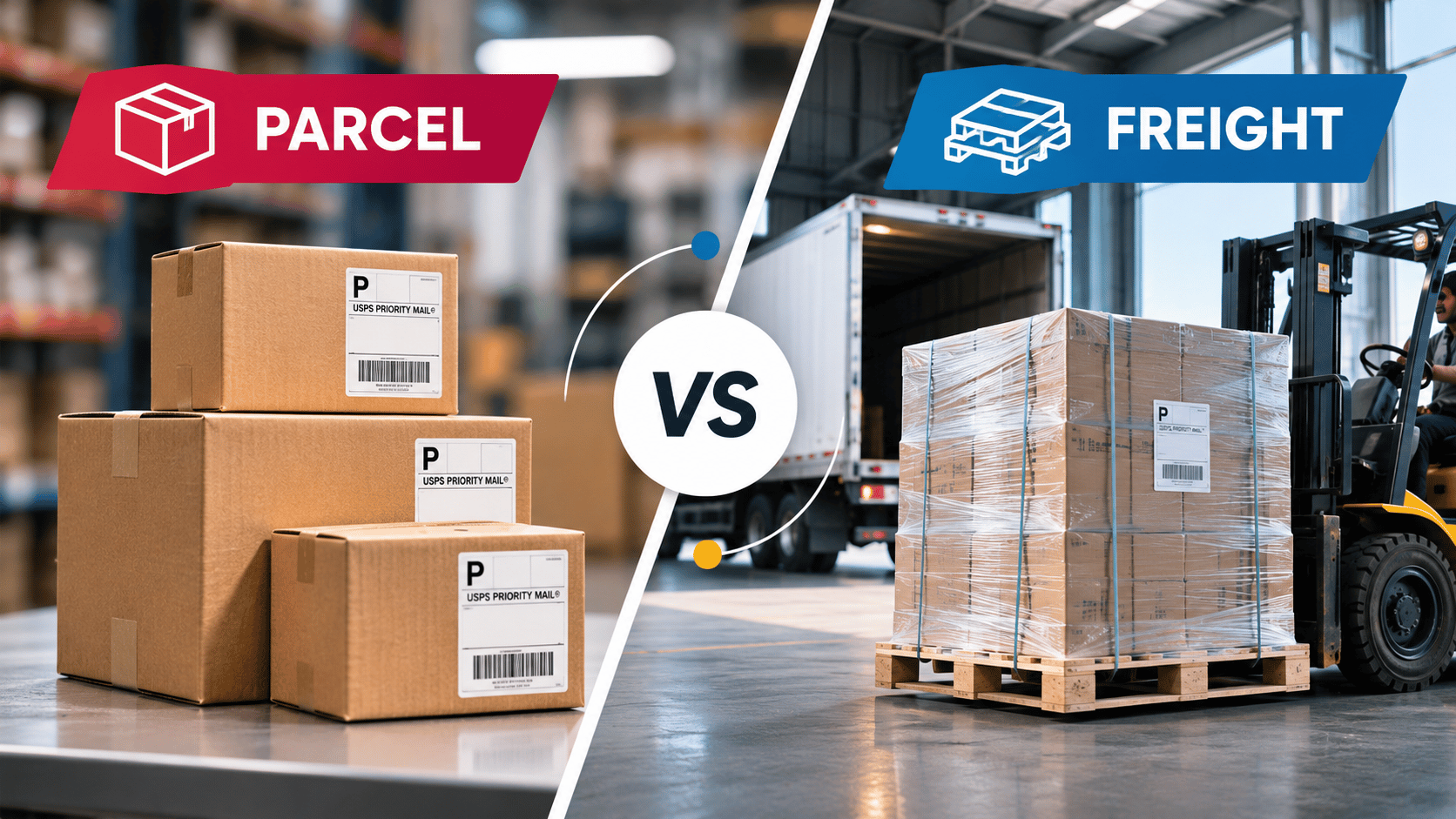
When you need to ship something, you face an important decision: should you use a parcel carrier like UPS or FedEx, or should you work with a freight carrier? Understanding the fundamental differences between freight and parcel shipping is essential for choosing the right solution for your business. The wrong choice can result in higher costs, delivery delays, or even rejected shipments. This comprehensive guide explains the key differences between freight and parcel shipping, helping you make an informed decision for every shipment.
What Is Parcel Shipping?
Parcel shipping refers to the transportation of small to medium-sized packages through dedicated parcel carriers. USPS, UPS, FedEx, and DHL are the major parcel carriers in the United States. These carriers operate a network of distribution centers, sorting facilities, and local delivery routes designed to move individual packages quickly and efficiently.
Parcel carriers excel at handling high-volume, small-package operations. They use a hub-and-spoke model where packages are sorted at regional centers, consolidated with other packages heading to similar destinations, and then delivered to individual addresses.
What Is Freight Shipping?
Freight shipping, also known as freight transportation or LTL (less-than-truckload) and FTL (full truckload) shipping, refers to the transportation of larger shipments, heavier goods, or non-standard items. Freight carriers specialize in moving goods on pallets, in crates, or in quantities that don’t fit the standard parcel model.
Freight brokers like World Options connect shippers with freight carriers to move cargo across the United States. Freight can include furniture, industrial equipment, temperature-controlled goods, international shipments, and virtually any commodity that exceeds parcel size and weight limits.
Key Differences: Size and Weight Limits
Parcel Shipping Size and Weight Restrictions
Most parcel carriers have strict dimensional and weight limits:
- USPS Priority Mail Express: Up to 70 lbs, with no single piece exceeding 108 inches in length and girth combined
- UPS Ground: Up to 150 lbs per package, with maximum dimensions of 108 inches length plus girth
- FedEx Ground: Up to 150 lbs per package, with size restrictions similar to UPS
- DHL Express: Up to 150 lbs, with dimensional restrictions
Items exceeding these limits are automatically rejected and must be shipped via freight.
Freight Shipping Flexibility
Freight has virtually no upper weight limit and can accommodate oversized items that parcel carriers cannot handle. Common freight shipments include:
- Individual items weighing 500+ lbs
- Multiple pallets consolidated into single shipments
- Non-standard items requiring special handling
- Equipment and machinery
- Bulk quantities for retail or wholesale distribution
Cost Structure: How Pricing Works
Parcel Shipping Pricing Model
Parcel carriers use a straightforward pricing model based on:
- Weight of the package
- Delivery distance (zone-based)
- Service level (ground vs. express)
- Dimensional weight calculations (size-based pricing for oversized, lightweight items)
Example: Shipping a 15-pound box from Denver to Los Angeles via UPS Ground might cost $45-65, depending on service level and current rates.
Freight Shipping Pricing Model
Freight pricing is more complex and depends on:
- Freight class (determined by density, stackability, and handling requirements)
- Weight and dimensions of the shipment
- Distance and shipping lane
- Carrier type (LTL vs. FTL)
- Fuel surcharges (typically 5-15% of base rate)
- Additional services (lift gate, white-glove delivery, temperature control)
- Pickup and delivery locations (residential vs. commercial)
Example: Shipping a pallet of furniture weighing 800 lbs from Denver to Los Angeles via LTL freight might cost $300-600, depending on freight class and carrier.
Delivery Speed and Transit Times
Parcel Delivery Standards
Parcel carriers offer predictable, time-certain delivery windows:
- USPS Priority Mail: 1-3 business days
- UPS Ground: 1-5 business days (depending on zone)
- FedEx Ground: 1-5 business days
- Express options: Next-day or 2-day air service available
Parcel carriers prioritize speed and convenience, operating on fixed schedules with guaranteed delivery windows.
Freight Transit Times
Freight transit times are longer than parcel but offer scheduling flexibility:
- LTL Freight: 2-7 business days (depending on distance and carrier consolidation)
- FTL Freight: 1-4 business days (full truckload moves faster, with less consolidation wait)
- Scheduled pickups: Based on carrier routes and capacity
Freight speeds depend on shipping lane efficiency, carrier consolidation schedules, and whether you book LTL or full truckload service.
Services and Handling Options
Parcel Services
Parcel carriers offer limited service options:
- Standard ground delivery to dock or signature-required
- Residential delivery with additional fees
- Signature confirmation
- Limited tracking (by package tracking number)
- Insurance (additional cost)
Parcel carriers do not offer white-glove delivery, assembly, or specialized handling for fragile or hazardous items.
Freight Services
Freight carriers provide extensive specialized services:
- Liftgate service for residences or locations without loading docks
- White-glove delivery including inside placement and setup
- Temperature-controlled shipping for perishables and sensitive goods
- Hazardous material handling certified by DOT
- Real-time GPS tracking with geofencing alerts
- Expedited freight for urgent shipments
- Scheduled delivery with narrow delivery windows
- Inside pickup and delivery for difficult-access locations
When to Use Parcel Shipping
Choose parcel shipping when:
- Your shipment is under 150 lbs
- Individual packages fit within dimensional limits
- You need fast, predictable delivery (2-5 business days)
- You’re shipping directly to consumer addresses
- Cost per package is the priority
- You don’t require specialized handling
- You need frequent pickup availability
Parcel shipping is ideal for e-commerce businesses, small business shipments, and consumer-to-consumer shipping.
When to Use Freight Shipping
Choose freight shipping when:
- Your shipment exceeds 150 lbs
- You’re shipping furniture, equipment, or oversized items
- You need specialized handling (temperature control, white-glove delivery)
- You’re consolidating multiple items onto pallets
- You require shipping to commercial locations
- You need real-time tracking and security
- You’re shipping to international destinations
- Cost efficiency matters more than delivery speed
Freight shipping is ideal for B2B shipments, retail distribution, manufacturing logistics, and specialized commodity transportation.
Hybrid Approach: When to Consider Both
Some businesses use both parcel and freight depending on shipment characteristics:
- Parcel for last-mile delivery: Small orders to individual consumers via UPS or FedEx
- Freight for consolidation: Bulk orders to retail locations or warehouses via LTL carriers
- Freight for specialization: High-value items requiring temperature control or security
- Parcel for speed: Emergency shipments that need overnight or 2-day delivery
The Role of Freight Brokers
Understanding freight vs. parcel becomes even more important when working with a freight broker. Freight brokers like World Options help shippers navigate the freight landscape by:
- Evaluating whether freight or parcel is appropriate for each shipment
- Connecting shippers with the right carriers for their needs
- Managing complex documentation like Bills of Lading
- Optimizing freight class and shipping specifications
- Identifying the most cost-effective solution
- Handling claims and ensuring carrier security standards
Common Mistakes When Choosing Between Freight and Parcel
Mistake 1: Forcing oversized items through parcel carriers Result: Shipment rejection or “dimensional weight” overcharges that exceed freight costs
Mistake 2: Using freight for small, parcel-appropriate shipments Result: Higher costs and longer delivery times than necessary
Mistake 3: Not considering specialized services Result: Damaged goods, missed delivery windows, or security issues
Mistake 4: Ignoring carrier capabilities Result: Incompatible service for your shipment type or destination
Mistake 5: Making carrier decisions based on brand recognition alone Result: Missing better-value specialized carriers for specific needs
Decision Matrix: Freight vs. Parcel at a Glance
| Factor | Parcel | Freight |
| Weight Limit | Up to 150 lbs | 200+ lbs or unlimited |
| Size Flexibility | Restricted | Highly flexible |
| Cost per lb (small items) | Lower | Higher |
| Cost per lb (large items) | Much higher | Lower |
| Delivery Speed | 1-5 business days | 2-7 business days |
| Tracking | Basic | Real-time GPS |
| Specialized Services | Limited | Extensive |
| Handling | Standard | Customizable |
| Commercial vs. Residential | Both | Primarily commercial |
| Documentation | Minimal | Extensive (BOL required) |
Partner With a Freight Expert
Making the right choice between freight and parcel can significantly impact your shipping costs, delivery reliability, and customer satisfaction. World Options helps shippers and businesses evaluate both options and select the most appropriate solution for every shipment.
Whether you’re shipping a single pallet, managing temperature-controlled goods, or coordinating international freight, understanding the freight vs. parcel distinction ensures you make informed decisions.
Ready to optimize your shipping strategy? Contact World Options today to discuss whether freight or parcel shipping is right for your business, and discover how we can help you reduce costs while improving delivery reliability.